
One Task, and the Reason It Comes Next
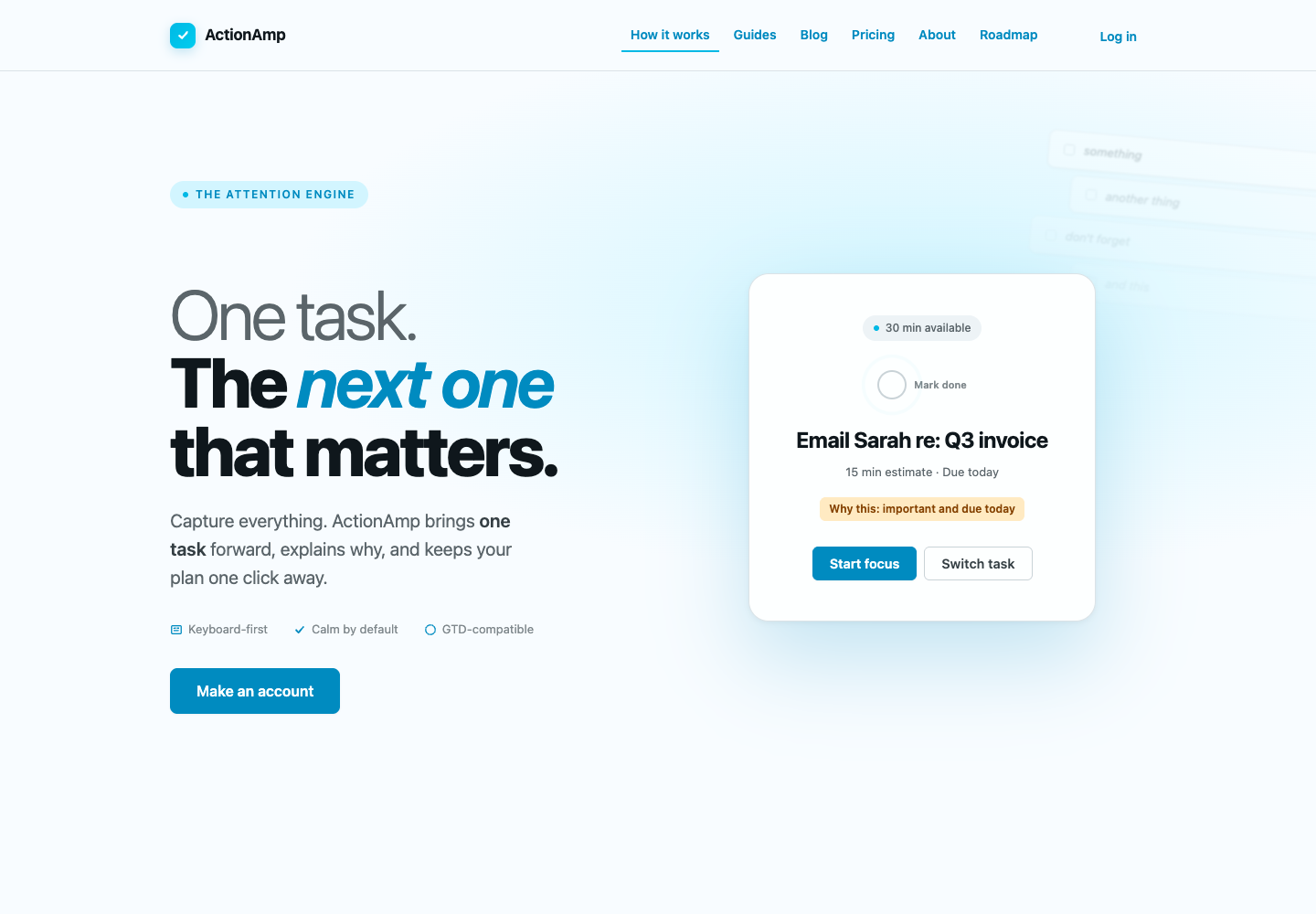
ActionAmp opens with one recommended action and shows the priority, timing, and size signals behind the choice.
- Project
- ActionAmp
- Role
- Product strategy, UX design, and engineering
- Timeframe
- 2026 – present
- Status
- Live
Evidence from the work
- Artifact
- Working product
- Product decision
- One recommended action with a visible reason
What this is
ActionAmp is a task and attention system for people who can capture work but still struggle to choose where to begin. It holds tasks, projects, and reference material, then brings one recommended action onto the working screen.
The product combines product strategy, interface design, and recommendation logic. We continue to develop it as a studio product.
The friction
You open a task manager to start work and meet a dashboard of overdue items, priorities, projects, and filters. The system preserved the commitments, but it handed the choice back to you.
More organization can make that moment worse. Each field creates another signal to compare. A well-maintained system can become a precise description of why you feel stuck.
The senior decision
We made the opening screen answer one question: which useful action deserves attention now?
ActionAmp considers the task’s priority, timing, and size. It then shows one recommendation and explains the reason behind it. The explanation lets a user judge the suggestion instead of treating the recommendation as an instruction.
The rest of the plan remains available. It does not compete for attention on the working screen. This creates a sharp distinction between maintaining the system and using it to act.
Capture and triage remain separate. Capture preserves the thought. Triage asks the user to decide what it means before the recommendation model treats it as a commitment.
What became real
The product now supports a compact loop: capture incoming work, sort it into the system, then return to a focused recommendation. The recommendation screen includes the task and the reason it surfaced.
Users can still inspect their projects and commitments. ActionAmp changes which part of that system receives visual priority when it is time to work.
Evidence
The product experience is available at actionamp.com. The public interface shows the single-action recommendation and its supporting explanation.
The evidence supports the implemented interaction model. It does not support a productivity percentage or a claim that the recommendation suits every working style.
What we learned
Task systems preserve commitments and help someone act. Giving both jobs equal weight on one screen lets storage concerns dominate attention.
Recommendations also need inspectable reasoning. A user can accept, reject, or improve a suggestion when the product names the factors behind it.
Current state
ActionAmp is live and under active development. The recommendation model and surrounding task workflow continue to change as we test where the product reduces a decision and where it adds one.