
From One Article to a Complete Campaign
One source argument became 32 reusable tiles, four account voices, and a 37-date campaign that remained reviewable outside the scheduling tool.
- Project
- Dakic campaign system
- Role
- Editorial system design, asset generation, and publishing automation
- Timeframe
- August 2026 – present
- Status
- Ongoing
Evidence from the work
- Campaign artifact
- 32 editable tiles across 37 publishing dates
- Channel plan
- 148 account-specific publishing jobs
What this is
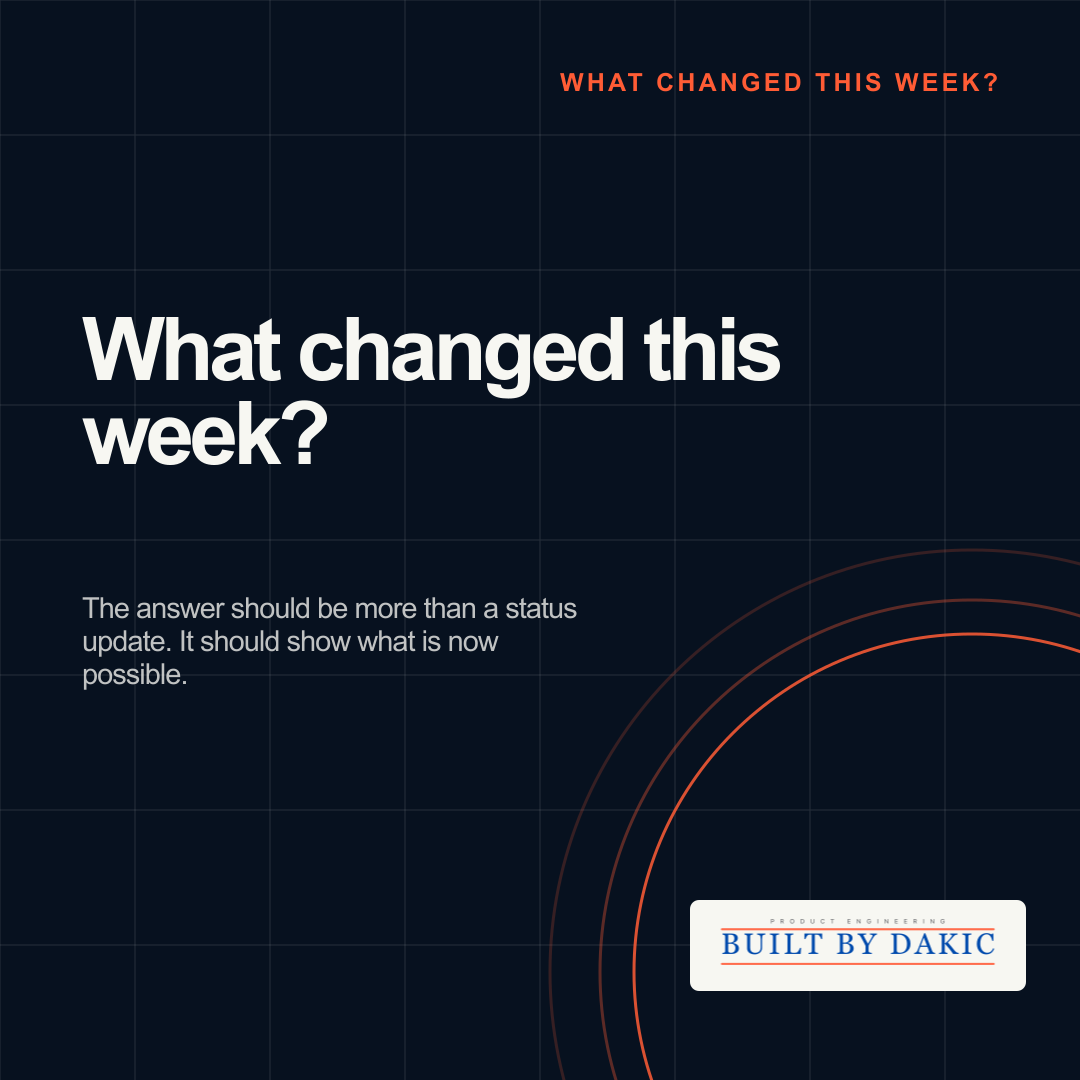
Dakic built a campaign system around the article and operating question “What changed this week?” One argument now supports text-led visual assets, channel-specific posts, a dated schedule, an offline preview, and publishing records.
The campaign remains active. Its files also serve as a repeatable model for future article-led campaigns.
The friction
Repurposing an article often produces disconnected fragments. A quote becomes a tile, someone shortens it for X, another person writes a LinkedIn caption, and a scheduling tool becomes the only record of what will appear where.
The work becomes difficult to review. Copy changes without the visual changing, and two accounts may publish the same message in the same voice. A local image path looks complete until the scheduler requires an uploaded media URL.
We needed a system that preserved the argument while allowing each account and format to do a different job.
The senior decision
We made the campaign manifest the editorial source of truth.
Each tile has an ID, headline, supporting line, style, content pillar, and communication goal. A generator turns those fields into an editable SVG and an upload-ready 1080 by 1080 PNG using the Dakic logo and visual system.
Separate files hold social copy, account assignments, and dates. The offline preview combines them for review. The scheduling script uploads media, creates the queued posts, and records the returned IDs and upload URLs in a receipt.
What became real
The “What Changed This Week?” campaign contains 32 core tiles placed across 37 dates. Four account voices produce 148 publishing jobs, each with its own copy, destination, time, and media assignment. The scripts generate artwork from a manifest and prepare that complete job list before any external scheduling occurs.
The system also distinguishes personal authority, company proof, technical depth, and concise X posts. It adapts the thought instead of copying one caption across every account.
Evidence
The repository contains the campaign manifest, 32 editable SVGs, PNG exports, social copy, a 37-date schedule, previews, and a receipt covering 148 scheduled posts.
The generator documentation includes the command needed to create another branded tile. The publishing script defaults to review mode and requires an explicit execution flag before it changes the external queue.
What we learned
One source argument can support a long campaign when each asset has a distinct job. Variation should deepen or apply the idea instead of restating the headline.
Receipts belong beside campaign files. They connect the approved source material to the media and posts that reached the scheduling system.
Current state
The generator, preview, scheduling data, and receipt workflow exist and have produced a scheduled campaign. We continue to refine account roles and the balance between native conversation posts and links back to the site.